Weather Remains a Determining Factor for Electric Utilities
By Big Data Federation, Inc.
-
Warmer-than-normal weather reduced overall electricity consumption.
-
Lower consumption provided relief from previously elevated electricity prices.
-
Utility companies responded with a downward adjustment of electricity output and electricity generation fell accordingly.
Warmer-than-normal weather across the U.S. reduced overall electricity consumption (-11% MoM/ 0% YoY/ -2% YoY3). Residential consumption, which accounts for roughly one-third, declined the most (-21% MoM /-2% YoY/-5% YoY3), as it is more sensitive to temperature changes in the weather. Commercial (-7% MoM/ 1% YoY/ -2% YoY3) and industrial (-3% MoM/ 1% YoY/ 0% YoY3) consumption also followed similar trends.
|
Data (October) |
MoM |
YoY |
YoY31 |
|
Electricity Consumption |
-11% |
0% |
-2% |
|
Residential |
-21% |
-2% |
-5% |
|
Commercial |
-7% |
1% |
-2% |
|
Industrial |
-3% |
1% |
0% |
|
Electricity Prices |
-4% |
8% |
18% |
|
Residential |
-3% |
9% |
20% |
|
Commercial |
-2% |
8% |
16% |
|
Industrial |
-9% |
7% |
18% |
|
Electricity Output |
-15% |
-3% |
-2% |
|
Electricity Generation |
-11% |
-1% |
-1% |
Source: Big Data Federation, Inc.
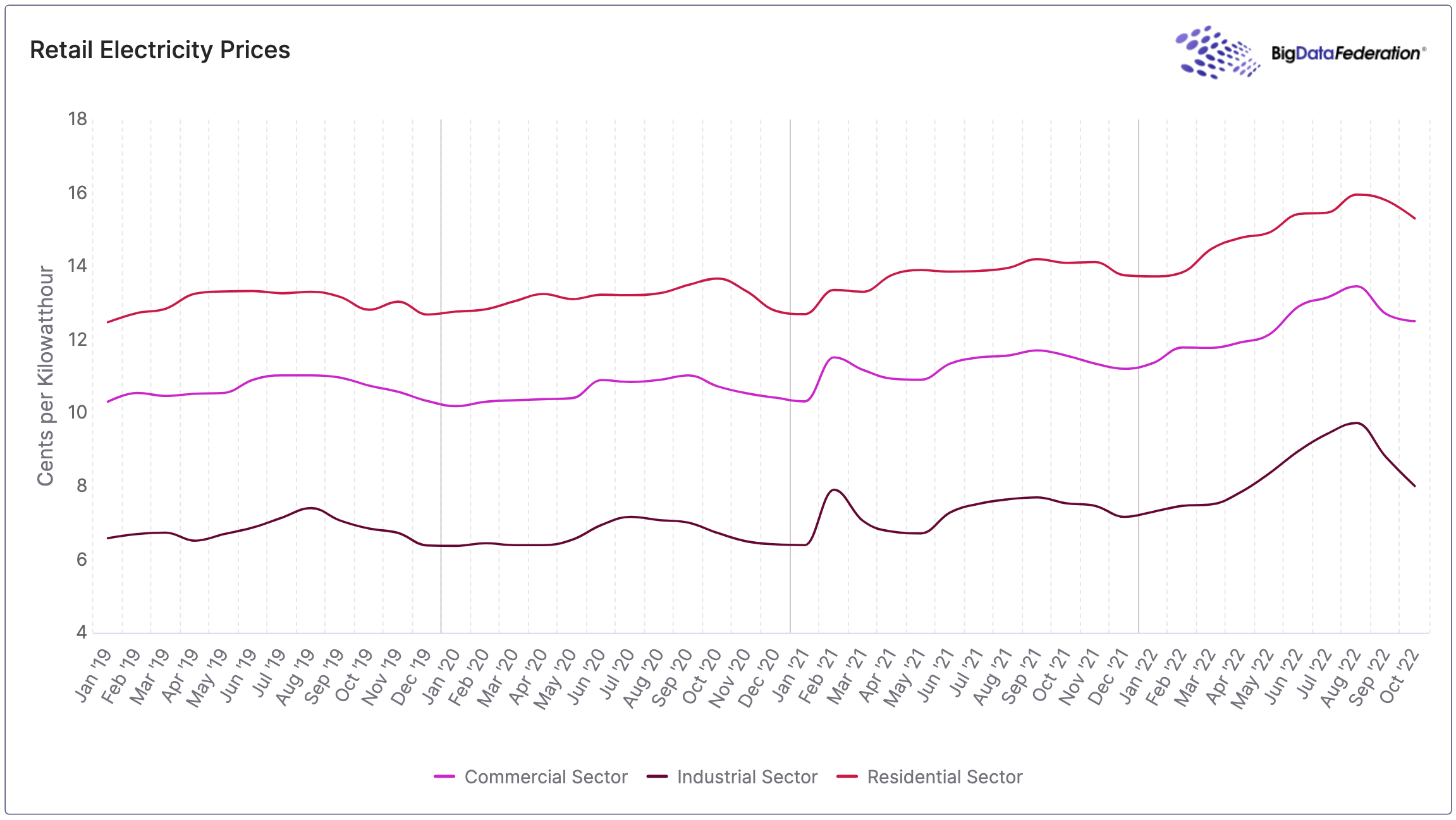
Lower consumption provided relief from previously elevated electricity prices (-4% MoM/ 8% YoY/ 18% YoY3). Rates for the industrial sector experienced a substantial month-over-month drop (-9% MoM/ 7% YoY/ 18% YoY3), followed by the residential sector (-3% MoM/ 9% YoY/ 20% YoY3) and the commercial sector (-2% MoM/ 8% YoY/ 16% YoY3). Notably, the wholesale price of electricity moves closely with the retail price of electricity to industrial customers, meaning any price changes show up there first.
Utility companies responded with a downward adjustment of electricity output (-15% MoM/ -3% YoY/ -2% YoY3), and electricity generation fell accordingly (-11% MoM/ -1% YoY/ -1% YoY3). Interestingly, the use of fossil fuels for electricity generation had a sizeable decline, allowing renewable sources to capture a larger share. Coal, in particular, decreased significantly because utility companies retired coal-fired units due to higher operational and maintenance costs.
While it is typical for the portion of renewables within the electric power generation mix to rise in periods of lower electricity consumption, utility companies are increasingly mentioning the importance of incorporating renewables in the generation portfolio. Additionally, the recently passed Inflation Reduction Act – viewed as a green catalyst – should accelerate more affordable deployments of renewables. Moving forward, not only will we witness fluctuations of electric output based on the weather, but a shift in the electricity generation mix from fossil fuels to renewables, which should turn permanent, rather than seasonal.
1YoY3 = comparison with pre-pandemic 2019
Published by Big Data Federation · All insights · Subscribe to Insights