Tides Turn at the Ports
By Big Data Federation, Inc.

-
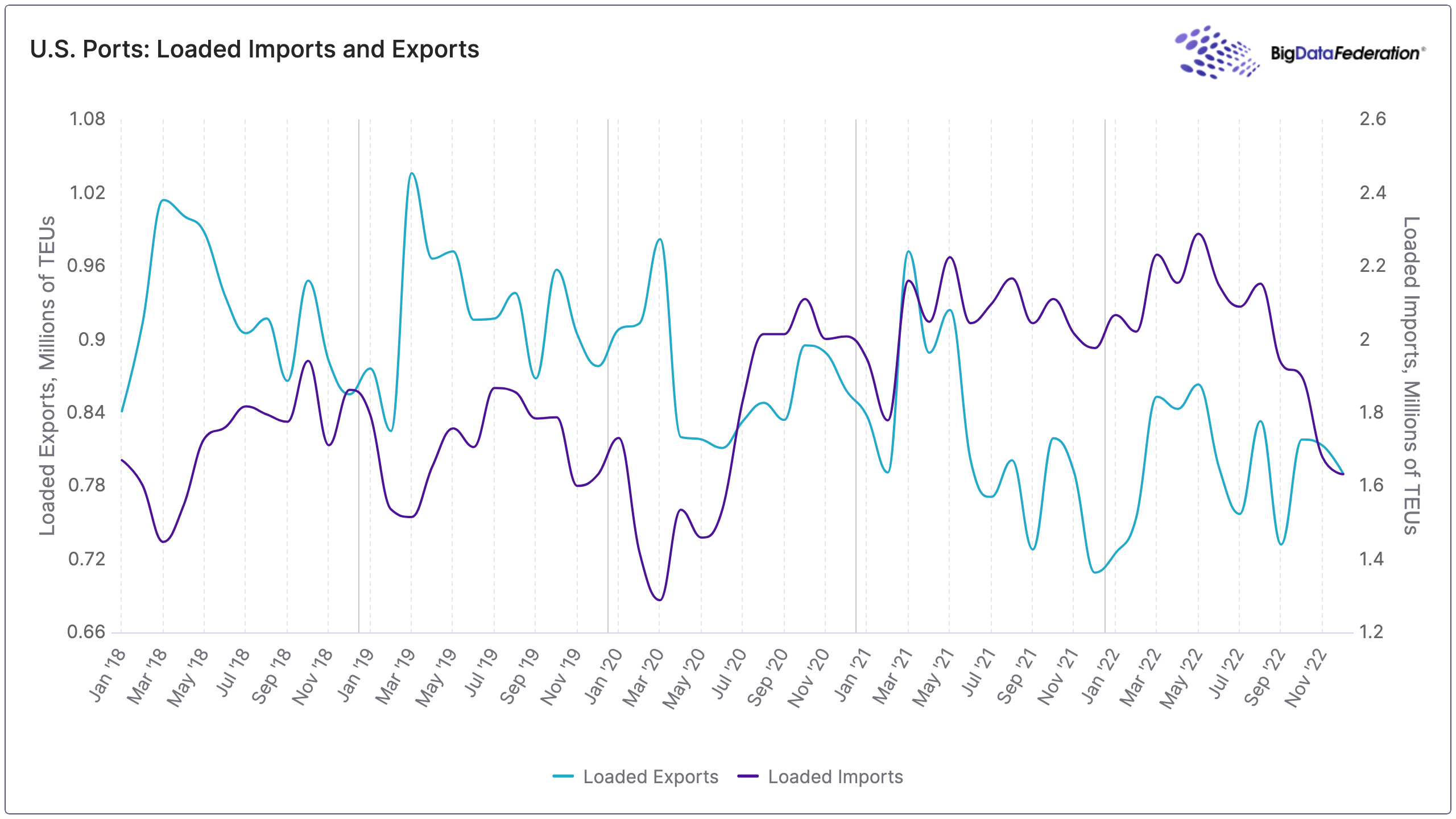
Loaded import volumes weakened and inched closer to levels before the pandemic-induced spending splurge
-
Ocean carriers tried to realign supply with demand to curtail sinking rates
-
Loaded export volumes also fell as exporters dealt with lower supply
Retailers drew back on overseas orders as consumer buying habits rapidly shifted and spending appetites got burdened by higher interest rates and inflation. Loaded import volumes weakened (-3% MoM / -17% YoY/ 0% YoY3) and inched closer to levels before the pandemic-induced spending splurge, with steep declines across U.S. ports on the Pacific Ocean. West Coast’s decline began last year when imports got redirected to other locations to bypass congestion, but it has spread to the East and Gulf Coast ports. Global container shipping rates reflected these trends (-24% MoM/ -76% YoY / 61% YoY3); rates for routes from China to the West Coast sank the most, at nearly half their peak.
|
Data (December) |
MoM |
YoY |
YoY31 |
|
U.S. Ports: Loaded Imports |
-3% |
-17% |
0% |
|
Global Container Shipping Rates |
-24% |
-76% |
61% |
|
U.S. Ports: Containership Capacity |
-2% |
10% |
-6% |
|
U.S. Ports: Loaded Exports |
-3% |
11% |
-10% |
Source: Big Data Federation, Inc.
Ocean carriers tried to stop the collapse in rates via increased blank sailings across routes, i.e., skipping scheduled ports or canceling planned voyages. Container capacity at U.S. ports fell as supply was realigned with demand (-2% MoM/ 10% YoY / -6% YoY3). Exports also dropped because exporters faced lower capacity from the higher blank sailings (-3% MoM /11% YoY/ -10% YoY3). Demand cliff comes as the industry prepares for a huge delivery of new ship vessels and containers. Overcapacity could push companies into a price war, putting additional downward pressure on freight rates, unless carriers can form alliances to curtail sailings, sell excess capacity, and convince clients to sign long-term contracts.
1YoY3 = comparison with December 2019
Published by Big Data Federation · All insights · Subscribe to Insights