Swamped Ports Brace For Flood
By Big Data Federation, Inc.
-
Spot rates for routes originating in Asia declined the most
-
Imports continued to pour in as increasingly longer lead times offset any dampening from China's COVID-19 shutdowns
-
Peak fall shipping season approaches with congestion rising across ports
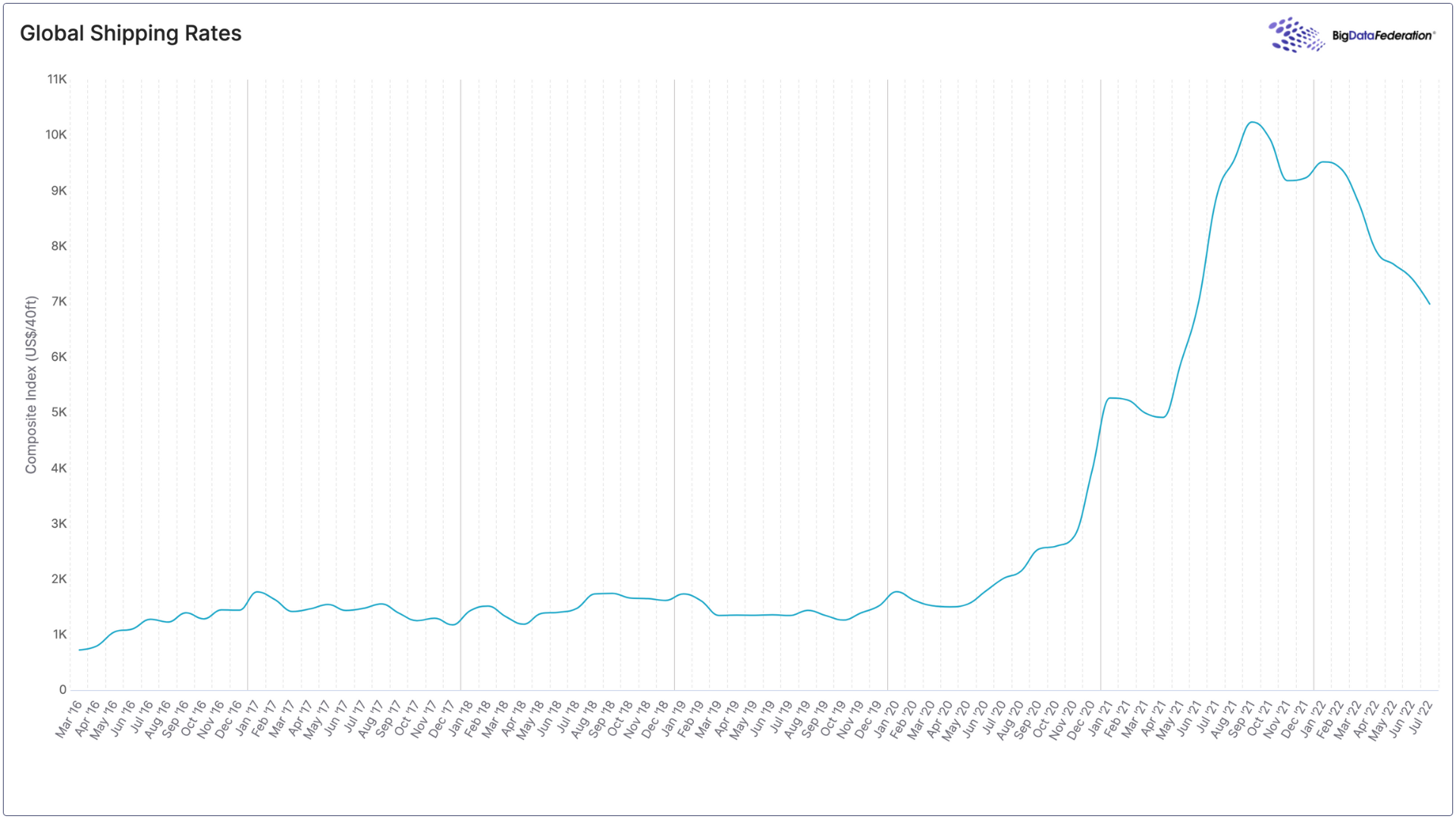
Softening goods demand from consumers shifting to services, an inflation squeeze, and recession fears combined with China’s zero-COVID strategy caused steady declines in global shipping rates throughout the year (-3% MoM/ +30% YoY/ +469% YoY3). Spot rates for trade routes originating in Asia were the most affected.
U.S. trade – equivalent to one-third of imports and one-fifth of exports – heavily relies on the South California ports of Los Angeles and Long Beach, especially with Asia. Unprecedented logjams at these locations caused importers to transfer to alternative routes. Compounding matters on the West Coast are the deadlock in labor contract negotiations and sustained delays in inland transportation, as railroad and trucking freight networks are also overwhelmed.
Redirections to the East and Gulf Coast initially alleviated bottlenecks, but as imports continued to pour in, other sites faced rising congestion (+6% MoM/ +3% YoY/ +30% YoY3). Balancing inventories against increasingly longer lead times from suppliers offset any dampening stemming from China's COVID-19 shutdowns.
| Data (May) | MoM | YoY | YoY31 |
| Global Container Shipping Rates | -3% | 30% | 469% |
| U.S. Loaded Import Containers | 6% | 3% | 30% |
| U.S. Loaded Export Containers | 2% | -7% | -11% |
| U.S. Empty Export Containers at Ports | 12% | 8% | 76% |
| Job Openings: Trade, Transportation, and Utilities | 0% | -1% | -2% |
| Source: Big Data Federation, Inc. |
Loaded exports also climbed (+2% MoM), although in the long run, it has fallen (-7% YoY/ -11% YoY3). The Ocean Shipping Reform Act, recently signed by Biden, aims to incentivize shipping lines to haul U.S. loaded exports instead of carrying empty export containers for a quick-turnaround at the more lucrative Asia-US route. Empties are widely available at U.S. ports since it runs a trade deficit (+12% MoM/ +8% YoY/ +76% YoY3).
As peak shipping season approaches in autumn, product orders for back-to-school, fall, and winter holidays will contribute to lengthy backups. Growing volumes may extend cycles and increase uncertainty, making it hard to match supply with demand. Earlier in the year, processing the backlog of container ships led to a sharp jump in imports and worsened the trade balance, this in turn dragged down GDP growth. No longer in demand, retailers were forced to discount offseason goods, hurting their profits.
1YoY3 = compared to May 2019
Published by Big Data Federation · All insights · Subscribe to Insights