S&P 500's Winning Streak After Midterm Elections
By Big Data Federation, Inc.
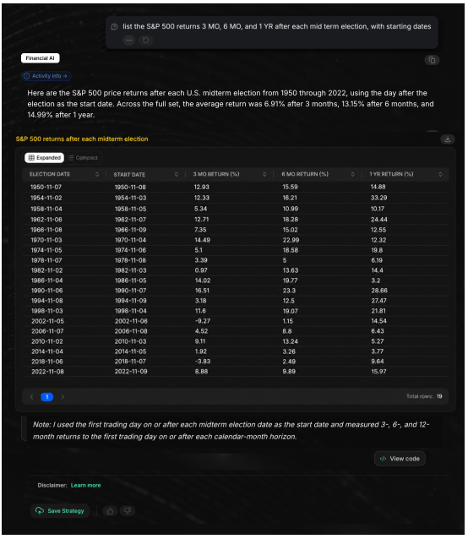
As Americans head to the polls for the 2026 midterm elections, history offers an encouraging message for stock market investors: the S&P 500 has delivered positive returns both six months and 12 months after all 19 completed U.S. midterm elections since 1950, regardless of which political party won.
A Perfect Historical Record Since 1950
Historical market data reveal an unusually consistent pattern:
- Six months after midterms: The S&P 500 posted positive returns in 19 out of 19 elections, averaging approximately 13%.
- Twelve months after midterms: The index again delivered positive returns in all 19 cases, with average gains of approximately 15%.
This pattern has persisted through recessions, inflationary periods, geopolitical crises, and changes in political leadership.
Why Does the Market Tend to Rally?
One possible explanation is the removal of political uncertainty. Investors often become cautious ahead of elections as they assess potential changes in taxes, regulation, and government spending. Once the election results become clearer, markets can shift their attention back to corporate earnings, economic growth, and Federal Reserve policy.
Midterm elections may also bring divided government, potentially reducing the likelihood of major policy changes. However, the historical relationship does not establish that election results themselves cause stock prices to rise.
What Does This Mean for 2026?
With the 2026 midterm elections taking place today, investors have reason to pay attention to this historical pattern.
Of course, 19 consecutive positive outcomes do not guarantee a 20th. Interest rates, valuations, corporate earnings, and economic conditions will ultimately determine market performance.
Nevertheless, the historical evidence is striking: despite political uncertainty and economic challenges, the year following a midterm election has consistently rewarded S&P 500 investors.
For investors concerned about election-related volatility, history offers a useful perspective: political uncertainty may be temporary, while the stock market's long-term upward tendency has been remarkably resilient.
Published by Big Data Federation · All insights · Subscribe to Insights