Return to Non-COVID Healthcare
By Big Data Federation, Inc.

-
Healthcare settings experienced demand shifts from COVID-related treatments to elective procedures
-
Elevated supply chain and labor costs cut into profit margins as procedure volume has not fully recovered
-
End of federal funding that helped mitigate losses caused some hospitals to announce hiring freezes and temporary staff reductions
As the coronavirus’ impacts wane, the Biden administration declared the end of the pandemic, and healthcare demand continued to normalize. Positive cases declined consistently (-41% MoM/ -56% YoY), and although attributed to undercounts from more at-home tests, the percentage of COVID inpatients dropped because new variants are associated with milder symptoms.
|
Data (August) |
MoM |
YoY |
YoY31 |
|
U.S. Positive COVID Cases |
-41% |
-56% |
N/A |
|
U.S. Healthcare Spending |
2% |
6% |
10% |
|
U.S. Healthcare Employees |
0% |
3% |
0% |
|
U.S. Healthcare Wages |
0% |
8% |
18% |
|
U.S. Healthcare Job Openings |
-22% |
3% |
37% |
Source: Big Data Federation, Inc.
National healthcare spending accelerated (2% MoM/ 6% YoY/ 10% YoY3), with home healthcare services and medical equipment exhibiting the fastest growth. Demand shifting from COVID-related treatments to elective procedures benefitted both healthcare service providers and medical equipment manufacturers. However, this sector can no longer count on supplemental federal funding to mitigate losses while simultaneously facing elevated supply chain and labor costs which hurt profits.
Healthcare employment has relatively stabilized compared to pre-pandemic norms (0% MoM/ 3% YoY /0% YoY3). Meanwhile, wages experienced sustained climbs (0% MoM/ 8% YoY/ 18% YoY3) as outpatient medical clinics competed with hospitals for the same credentialed workers. Among many strategies to attract talent, firms reported raising wages was the most common, followed by increased work flexibility, lower job experience requirements, better benefits, and outsourcing more work. High contract costs have contributed majorly to surging expenses as healthcare providers sought to fill workforce gaps.
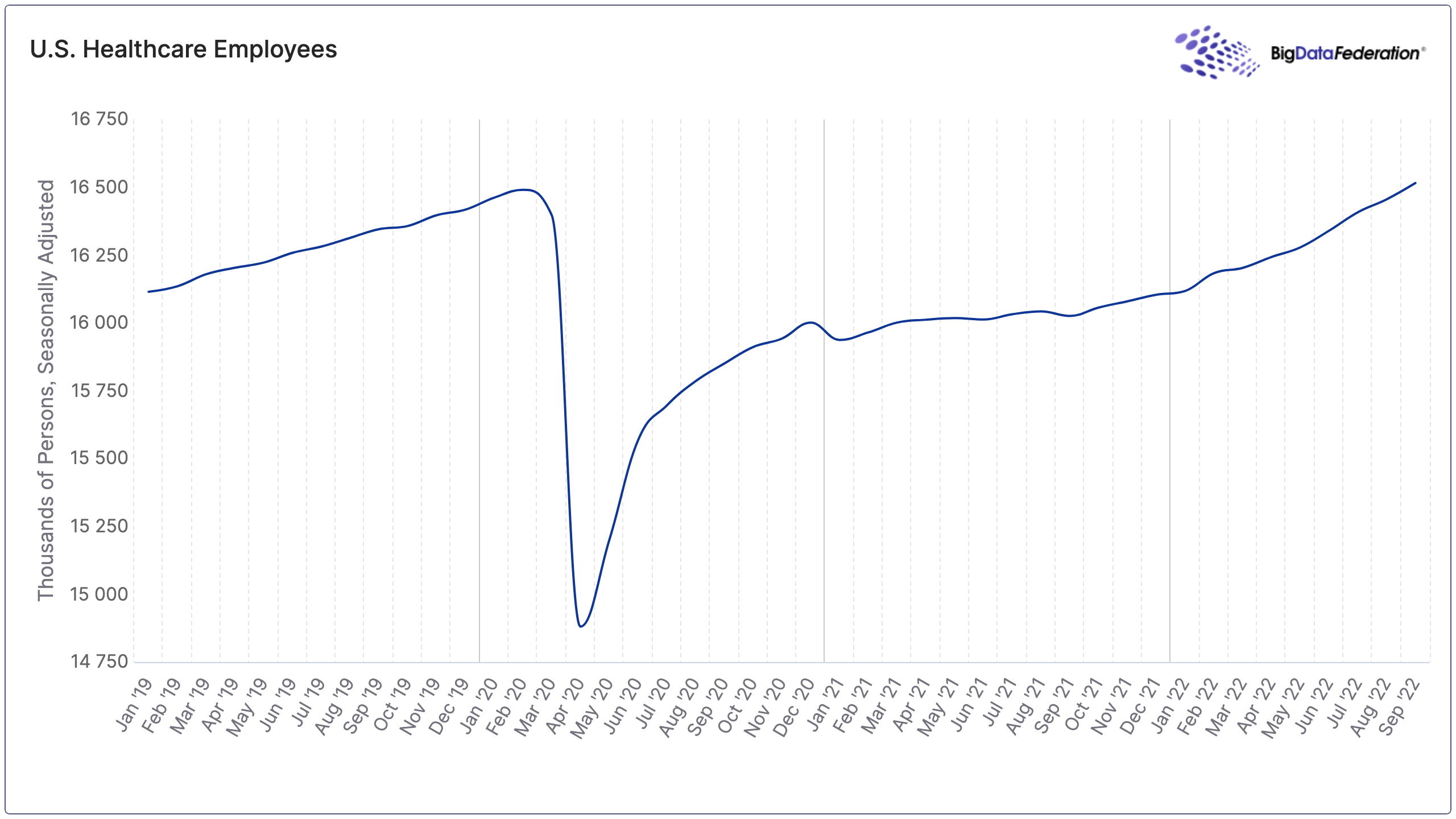
To reduce costs and improve profitability, some hospitals announced hiring freezes and temporary staff reductions, as evidenced by job openings numbers (-22% MoM/ 3% YoY/ 37% YoY3). Healthcare inflation is more likely to show up in the Personal Consumption Expenditures (PCE) price index measure since it is roughly double the weight as in the Consumer Price Index (CPI).
1 YoY3 = compared to August 2019
Published by Big Data Federation · All insights · Subscribe to Insights