Large-Cap Momentum Strategy
By Big Data Federation, Inc.

Momentum characteristics can be highly attractive for investors looking to capitalize on stocks demonstrating strong recent performance, aiming to outperform compared to the broader market.
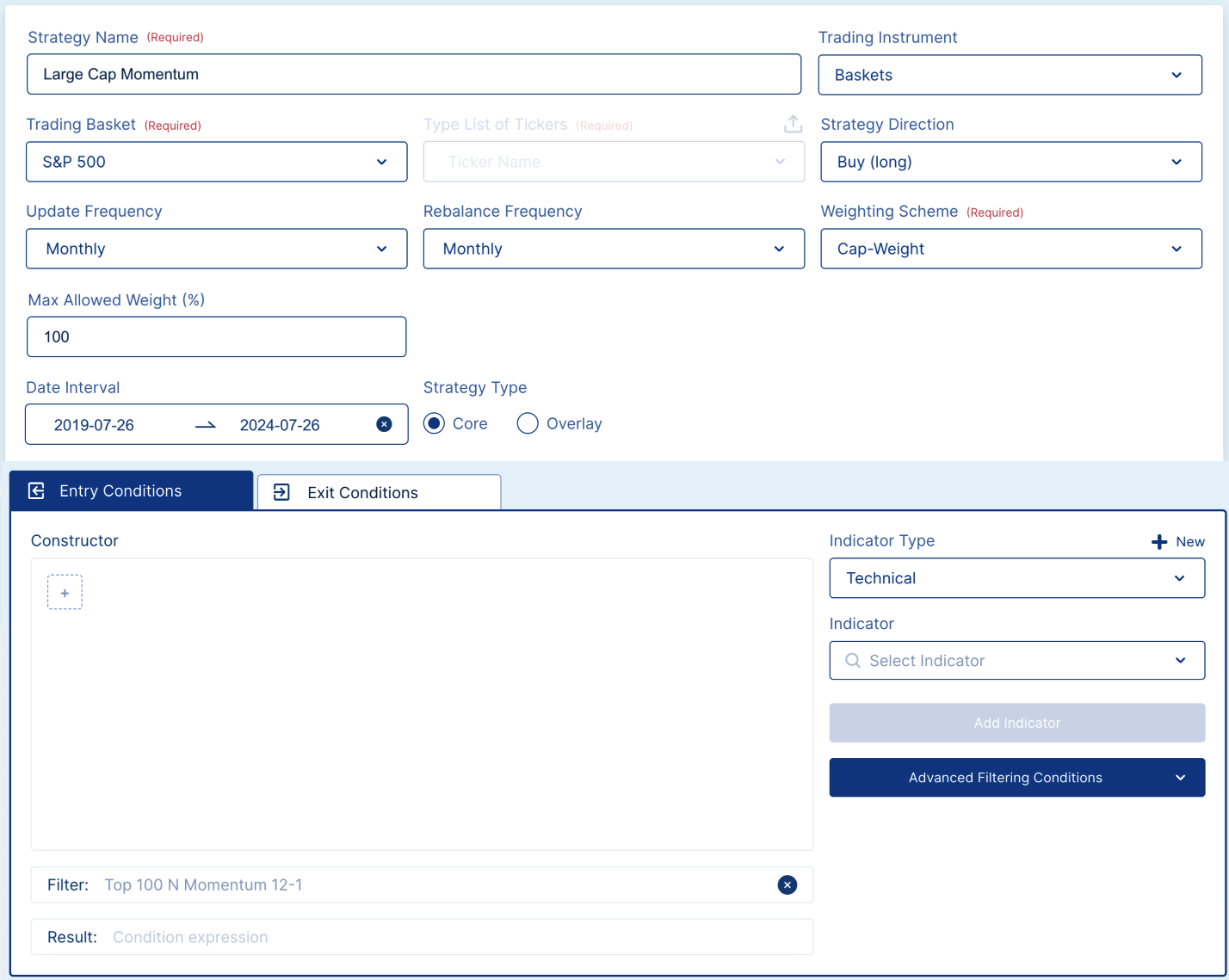
In this piece, we will build a momentum investment strategy for large-cap stocks using the S&P 500 Index as our stock basket. Specifically, we will apply a widely recognized momentum indicator known as the twelve minus one return (12-1) to filter the top one hundred stocks. For any ticker on a trading day, this indicator is defined as the cumulative return from a calendar year ago to a month ago, normalized by the standard deviation of daily returns over the previous three-month period. By ignoring the most recent month's performance, we attempt to mitigate the impact of short-term noise.
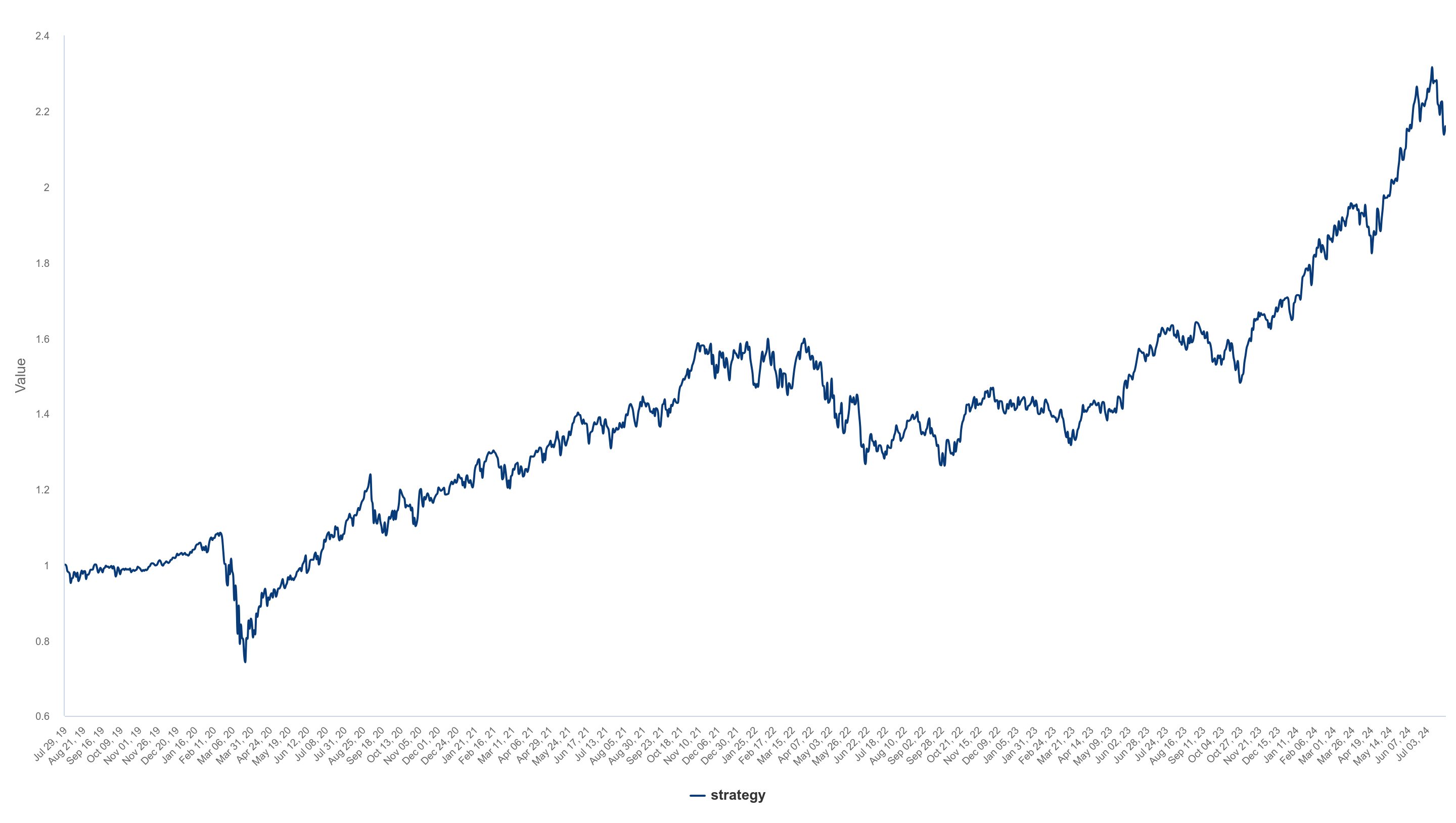
At the start of each month, we enter a long position on the top one hundred stocks from the universe of historical S&P 500 companies that exhibit the best 12-1 month relative performance compared to peers. In the following chart, we display the backtested portfolio formed using market cap weights over the past five years. Using Odinultra, we can build and evaluate this strategy in minutes with data-driven analytics support.
 |
 |
As the next step, we compare the performance of the above to two additional modeling frequencies: quarterly and bi-annually. The iShares MSCI USA Momentum Factor ETF (MTUM), the most prominent large-cap high momentum ETF, has been around for over a decade with approximately $10 billion in assets under management (AUM) and is updated bi-annually. Notably, our monthly updated momentum strategy outperformed MTUM by 380bp per annum since MTUM’s inception. Interestingly, our strategy with a quarterly update frequency closely tracks MTUM, except from 2020 onwards, which could be due to the issuer’s discretion. Users can also view performance measures, download historical positions, and access NAV details for further study from OdinUltra, if desired.
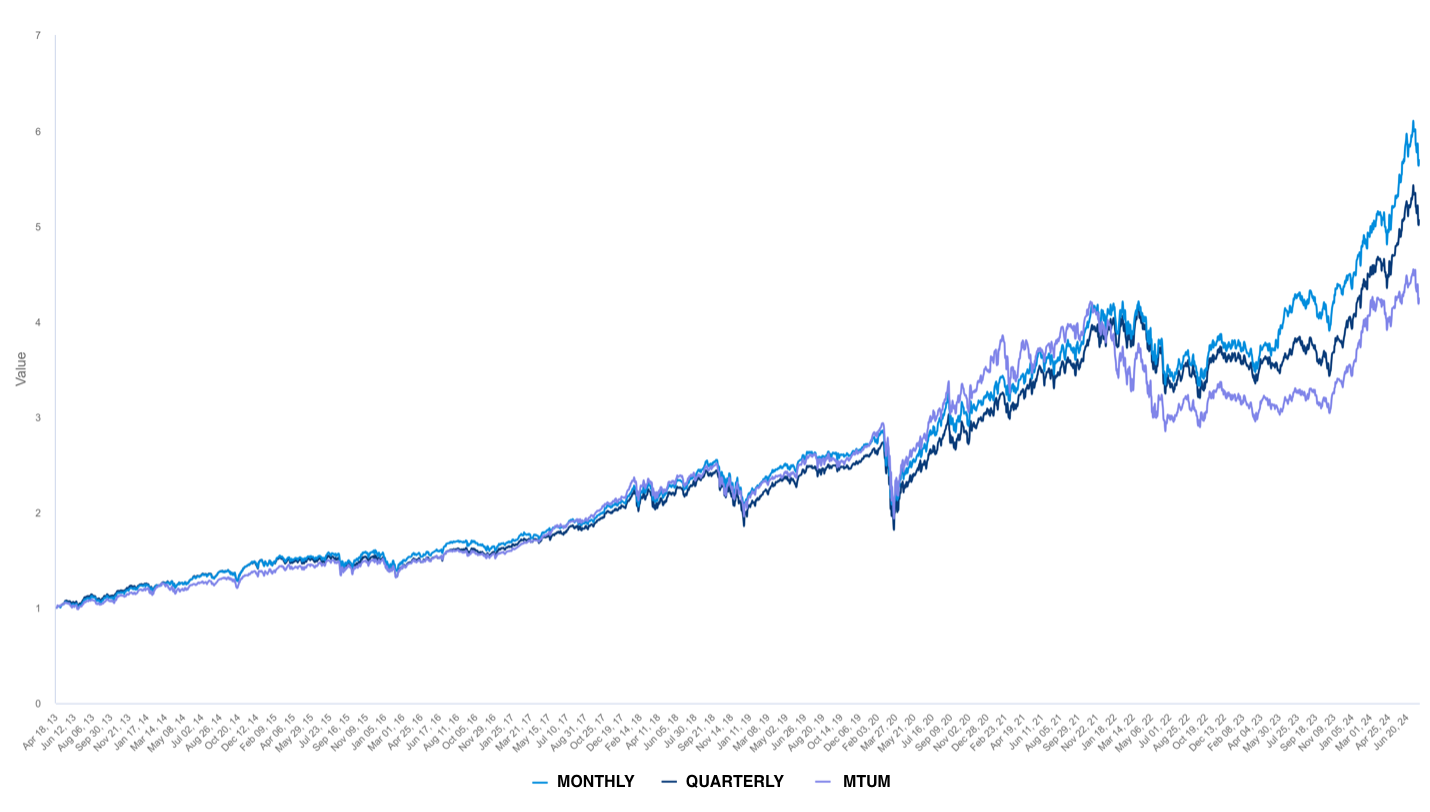
In this article, we illustrated the benefits of a more active approach to a well-known momentum strategy. By simply adjusting the rebalancing frequency from bi-annual to monthly with just a few clicks and no coding, we demonstrated significant performance enhancements to the strategy. No static strategy can survive throughout time; investment management must be dynamic to succeed.
To learn more, contact us at strategy@odinultra.ai.
Published by Big Data Federation · All insights · Subscribe to Insights