Electricity Rates Power Through
By Big Data Federation, Inc.
- Electric output fell due to seasonal patterns but remained stable compared to historical norms
- Electricity consumption and generation also decreased yet sustained above pre-pandemic levels
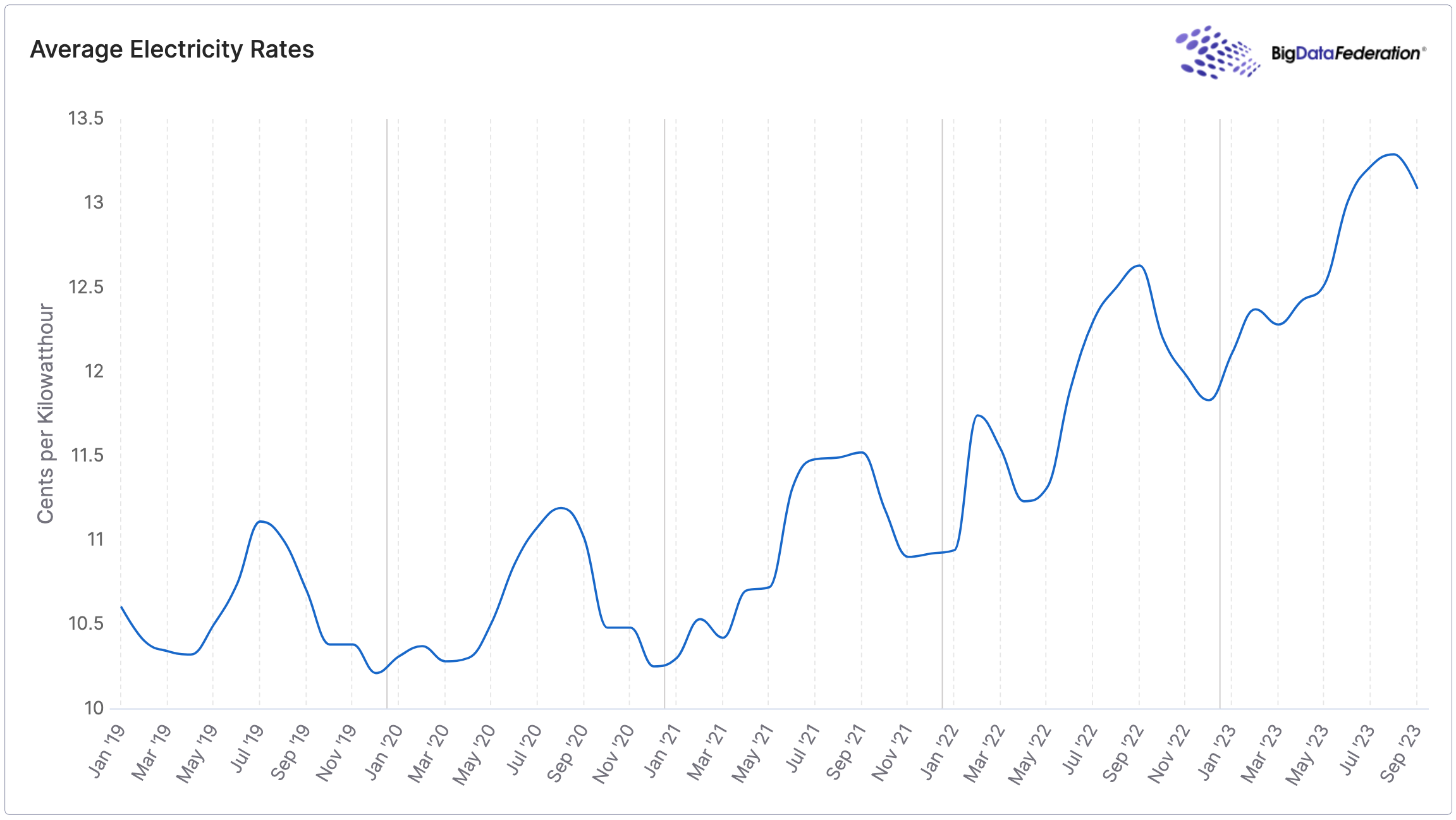
- Electricity rates displayed resilience despite reduced output, consumption, and generation
Electric output dropped in line with seasonal patterns but stayed stable compared to historical norms (-12% MoM / 0% YoY/ 0% YoY4). Electricity consumption decreased alongside output yet remained above pre-pandemic levels (-12% MoM / 3% YoY/ 4% YoY4). The residential sector recorded the most pronounced decline, followed by commercial, industrial, and transportation.
|
Data (September) |
MoM |
YoY |
YoY41 |
|
Electric Output |
-12% |
0% |
0% |
|
Electricity Consumption |
-12% |
3% |
4% |
|
Electricity Generation |
-15% |
4% |
2% |
|
Average Electricity Rates p/kWh |
-2% |
4% |
22% |
Source: Big Data Federation, Inc.
Electric power generation also fell in tandem with output and consumption (-15% MoM/ 4% YoY/ 2% YoY4). Most of the drop stemmed from a cut in electric power generation from fossil fuels, while renewable sources fared better. Notably, the share of renewable sources in the electricity power generation mix has reached one-fifth.
Electricity rates displayed resilience despite reduced output, consumption, and generation (-2% MoM / 4% YoY/ 22% YoY4). It only registered single-digit declines and sustained above pre-pandemic norms. Primarily because fossil fuel prices heavily dictate electricity rates, as fossil fuels still produce three times more electricity than renewable sources.
1 YoY4 = comparison with September 2019
Published by Big Data Federation · All insights · Subscribe to Insights