Predicting Payroll Without Surveys
By Big Data Federation, Inc.

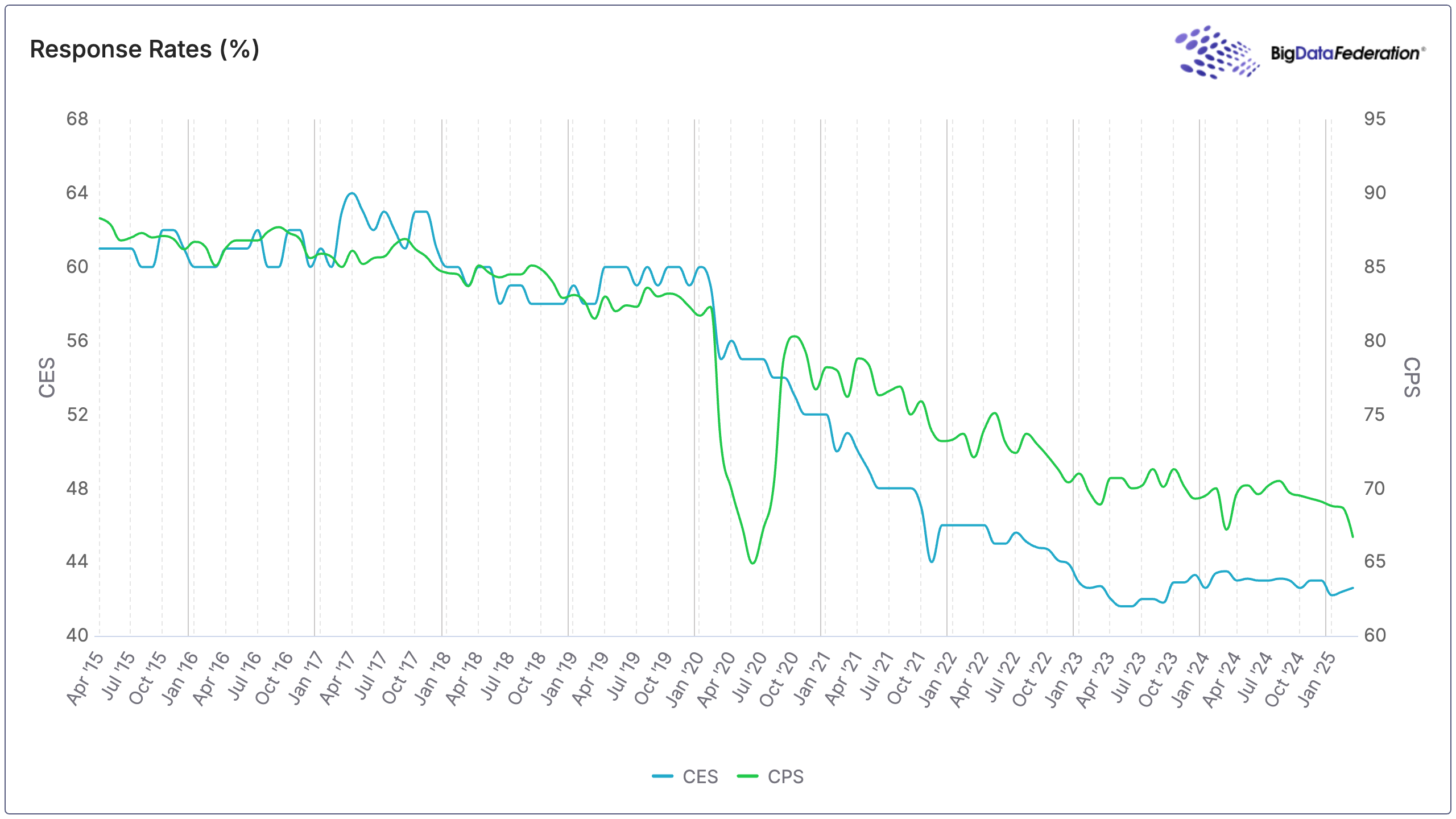
Revisions to economic data are common, the issue isn’t new, but it’s growing more pronounced and harder to ignore. At the heart of the problem is a classic trade-off: accuracy versus timeliness. Timely data is often based on government surveys, yet response rates have been falling for years — a trend that accelerated during the pandemic. Take the key labor reports: response rates for the Current Employment Statistics (CES, or establishment survey) and the Current Population Survey (CPS, or household survey) have each dropped roughly a quarter over the past decade, now standing at 43% and 67%, respectively.
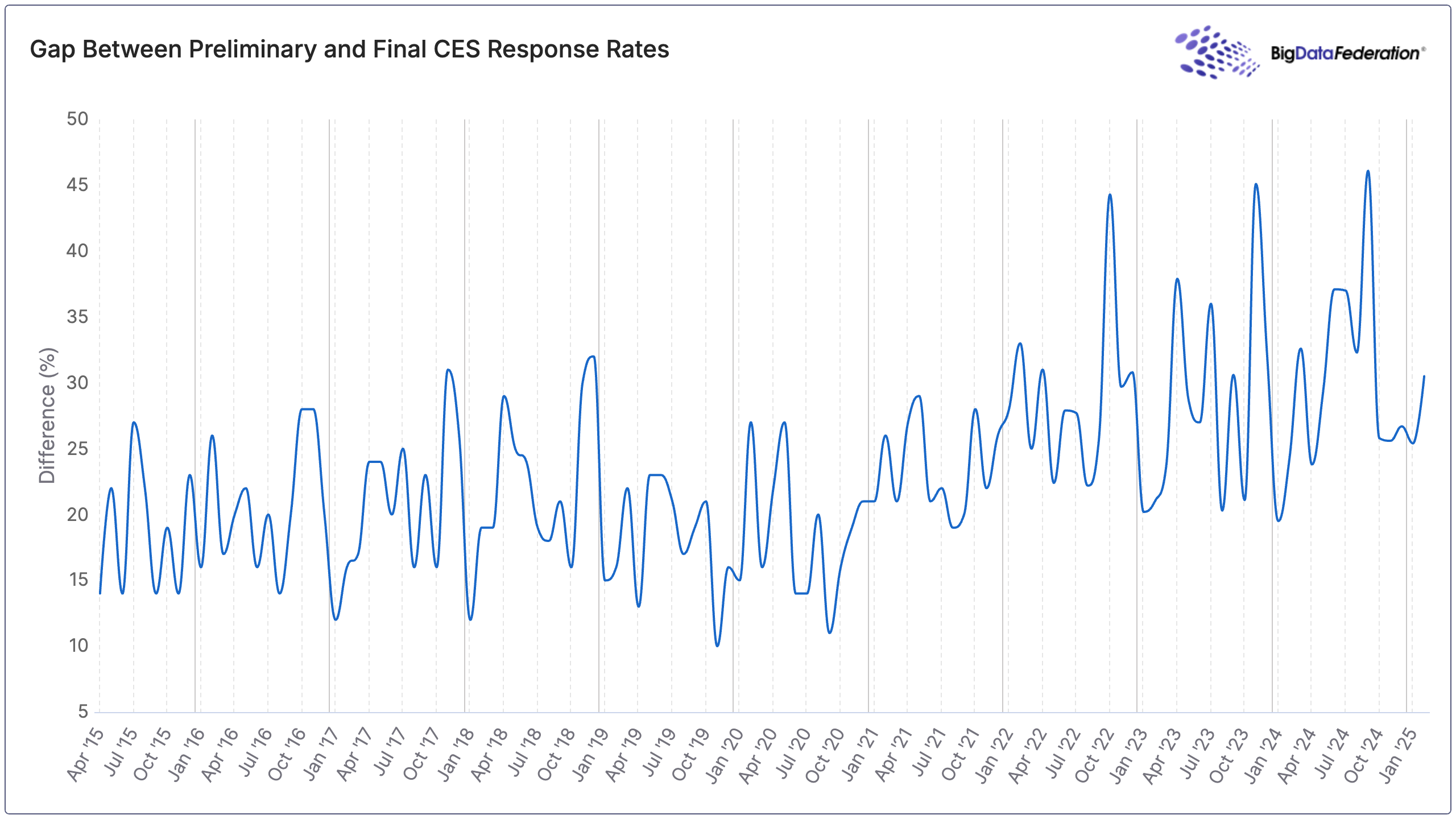
Of establishments that do respond to the CES survey, the difference between preliminary and final response ranges widely, from as little as 10% to as much as 46%. As shown in the chart below, the gap has surged after the pandemic, consistently remaining above 20%. Such variation underscores how much early survey data can misrepresent reality, making initial readings less reliable on their own.
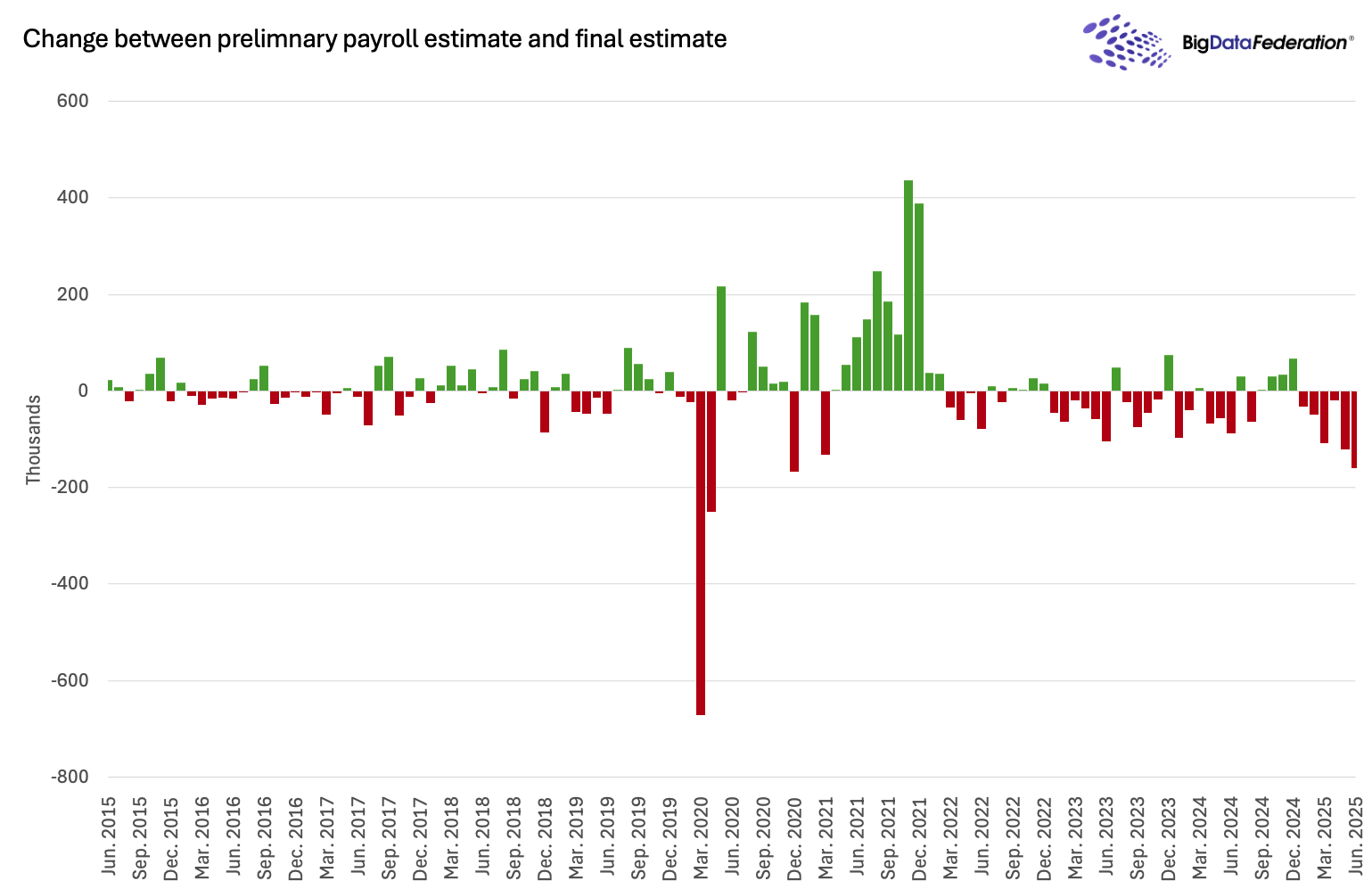
If we look closer at the CES survey payroll data, revisions between the preliminary estimate and the final estimate are roughly evenly split between upward and downward adjustments. We hypothesize that the magnitude of these revisions, in absolute terms, is driven by underlying response rates.
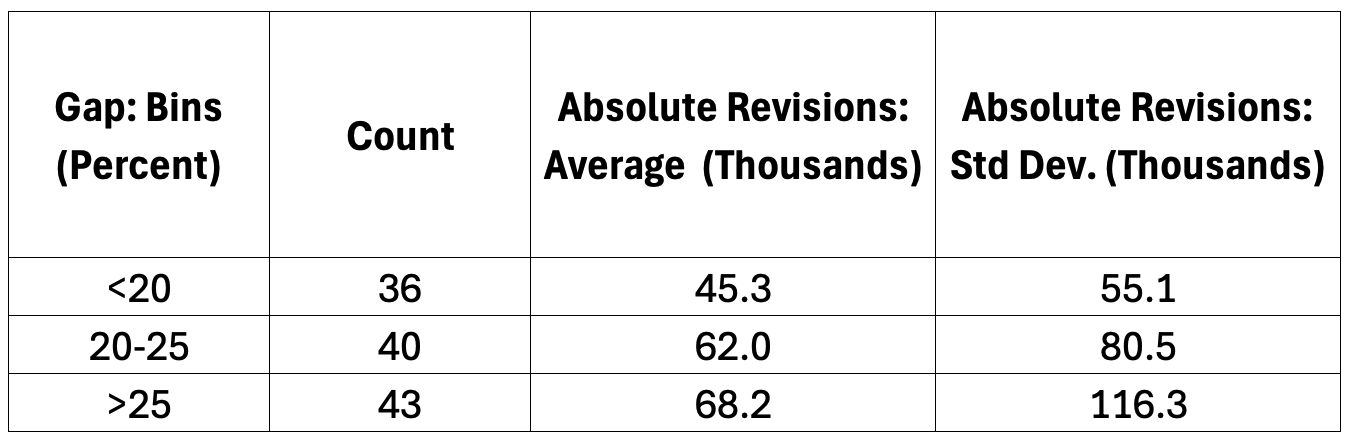
To test this, we grouped observations into equal-frequency bins by the gap between preliminary and final CES response rates. The results show a clear pattern: larger gaps correspond to larger absolute revisions. When the gap is under 20%, absolute revisions are relatively modest. But once the gap hits 20% or higher, absolute revisions jump and become more unpredictable. And this is all before the annual revision, which comes much later and draws on additional detailed data from state unemployment tax records to offer a clearer picture.
Markets focus on the latest data, not past revisions, yet outdated methodologies make the information that drives investors’ and policymakers’ real-time decisions increasingly unreliable. Government agencies must start modernizing their processes by leveraging valuable data across agencies and automating collection to deliver more timely and accurate solutions.
One of these valuable data sources could be the Electronic Federal Tax Payment System (EFTPS), a system run by the U.S. Department of the Treasury to process federal taxes payments to the Internal Revenue Service (IRS). All businesses with federal tax deposit requirements must pay electronically, following monthly or semi-weekly schedules – providing higher-frequency signals. EFTPS captures employer-level totals for federal income tax withheld, Social Security tax (both employer and employee portions), and Medicare tax (both employer and employee portions). While employee-level data is only available after W-2s are filed, researchers can back out per-employee payroll trends by dividing FICA contributions by statutory rates and combining them with historical firm size distributions or external benchmarks.
Understanding the labor market today requires triangulating across multiple data sources. This includes not only traditional government releases—like job openings and claims, which have their limitations—but also private-sector sources, such as ADP and LinkedIn’s employment analytics. At the same time, existing measures often fail to capture broader shifts in the modern labor market, such as the rise of gig work.
No single dataset tells the full story. By systematically analyzing a broader set of indicators based on timely and accurate data, these pieces combine to create a clearer, more actionable picture for investors and policymakers.
Published by Big Data Federation · All insights · Subscribe to Insights