Market Sidelines Analysts
By Big Data Federation, Inc.

What exactly drives the market? Do rising stock prices fuel optimistic consensus estimates, or do glowing estimates light the spark for price momentum? It's a classic chicken-and-egg scenario.
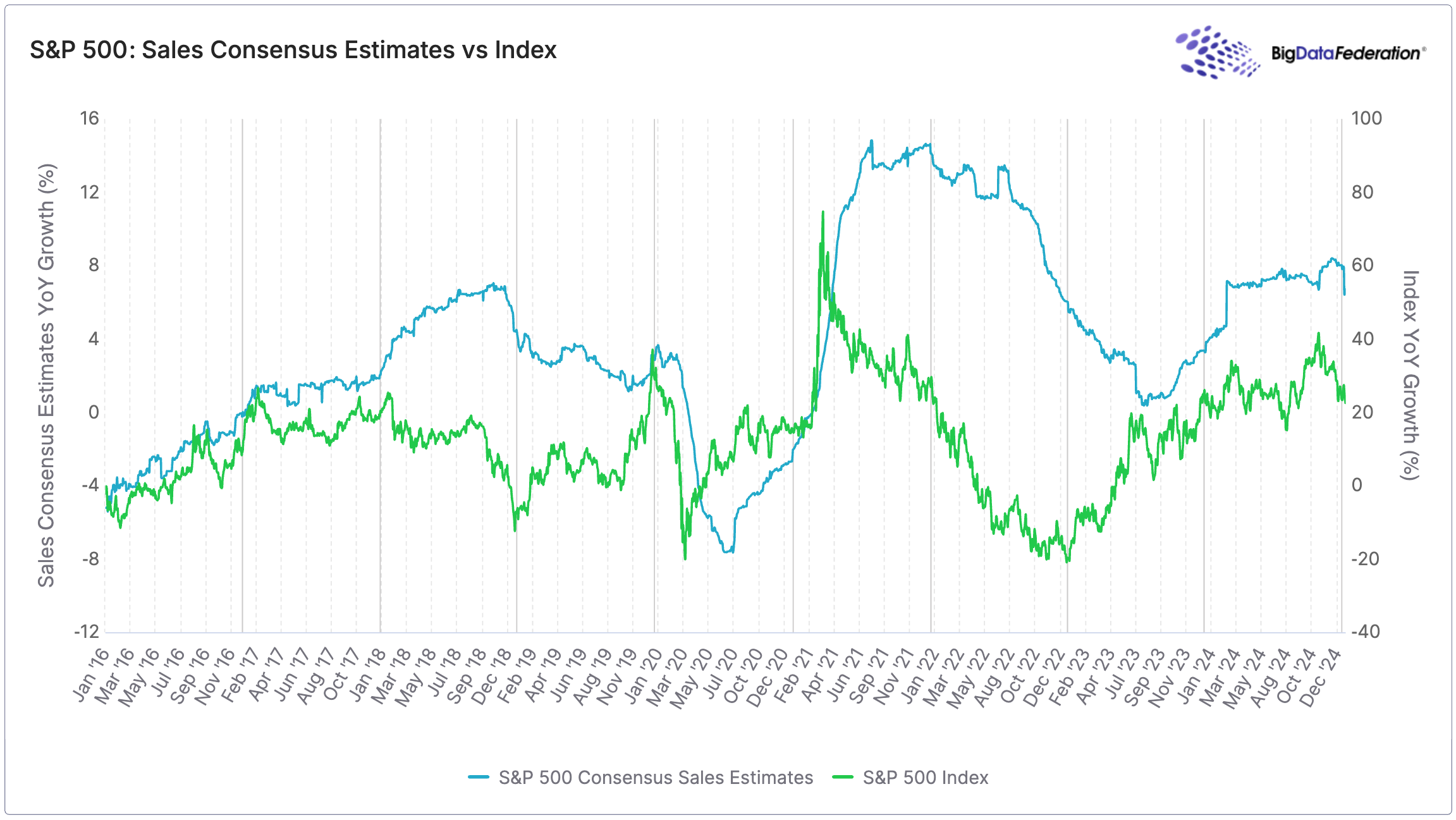
To uncover the answer, our first-of-its-kind, groundbreaking study dives into mass data aggregation for S&P 500 companies and compares them against the S&P 500 index price action. We utilize point-in-time S&P 500 constituents as they change over time based on market capitalization and other criteria. A correct list in time is highly critical because aggregated consensus sales estimates based on the current S&P 500 list would not be an apples-to-apples comparison to the S&P 500 index. Consensus sales estimates are summed on a forward annual basis.
When analyzing the year-over-year growth for both, a clear verdict emerges — price changes don’t follow the consensus, they drive it. Generally, consensus estimates lag price movements by a quarter, likely resetting after earnings reports as actual results and updated guidance are incorporated. In other words, analysts adjust their estimates 30-90 days after the market has already moved, as illustrated in the chart below.
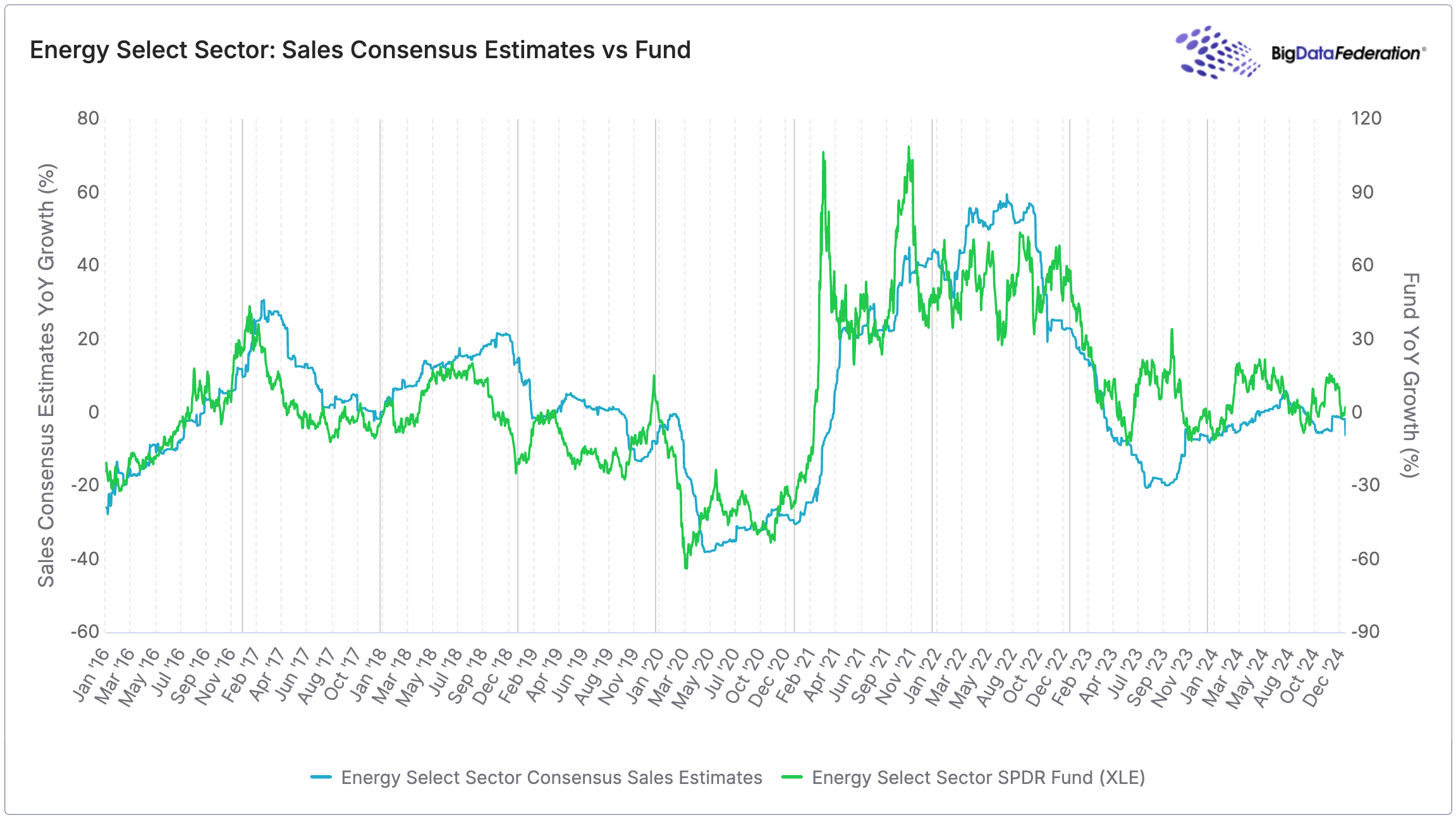
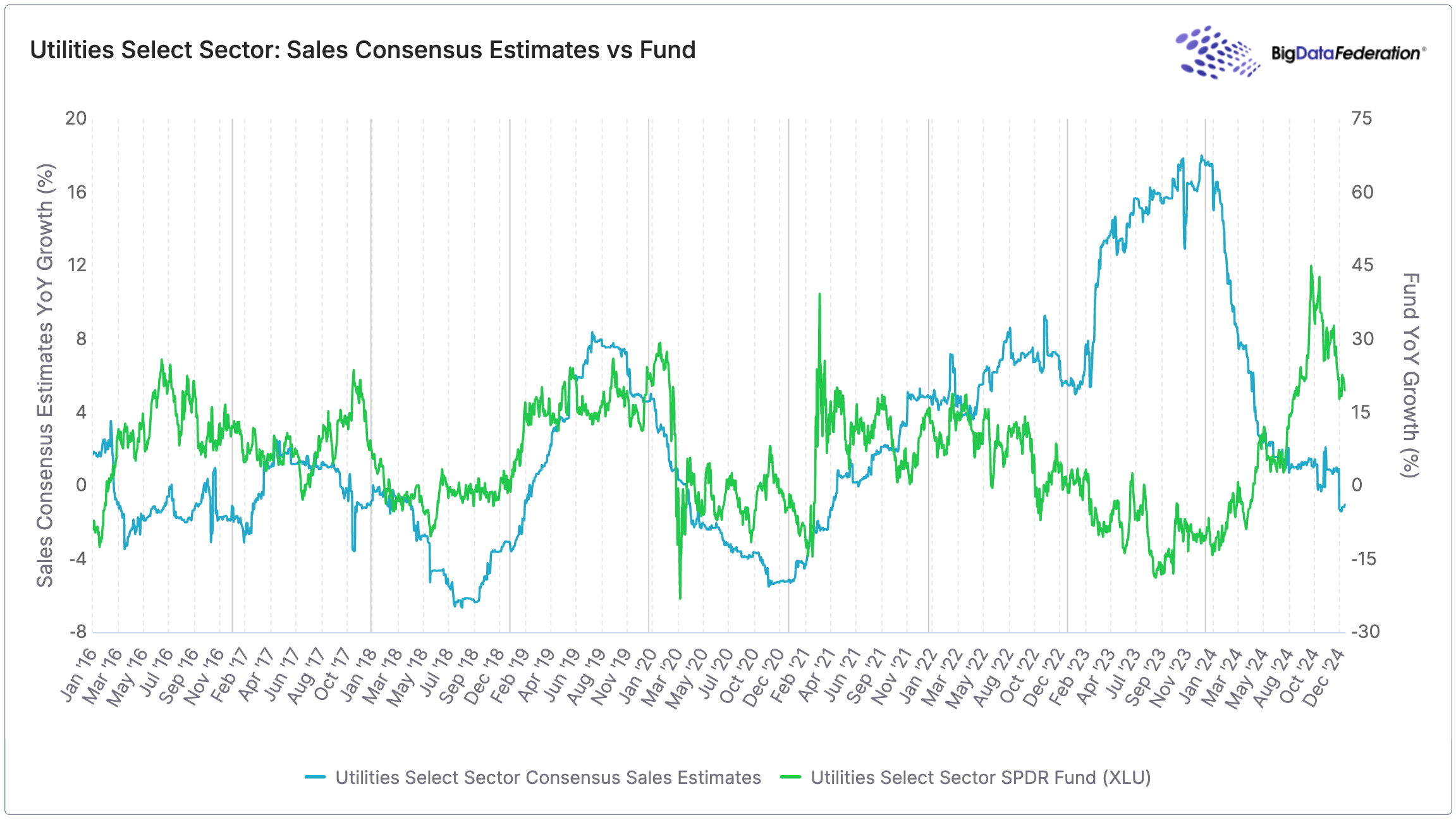
Our study identifies analysts whose sales estimates most closely track stock prices cover the energy, information technology, and communication services sectors, even if they lag behind. On the other hand, it reveals consensus sales estimates for the utilities and healthcare sectors were the least aligned with stock prices as shown below.
 |
 |
Wall Street’s sell-side may boast several skilled analysts, but decisions are often based on the aggregation, also known as consensus. Using point-in-time data, we have illustrated that — in aggregation — sell-side analysts take their fundamental cues from the price itself, not the other way around. We suspect this pattern extends to other financial metrics, such as earnings, where the lag and misalignment could be even more pronounced.
It’s now clear that sell-side estimate revisions do not inform investment strategies; instead, they simply reflect price action news. Independent, forward-thinking forecasts aren’t just an edge — they’re necessary to break away from the herd and stay ahead of the curve.
Published by Big Data Federation · All insights · Subscribe to Insights