Lower Prices Fail To Fuel Summer Driving Season
By Big Data Federation, Inc.

-
Worldwide production gained modestly as OPEC and non-OPEC output improved but consumption stagnated easing tightness in oil markets.
-
While reflected in declines for U.S. retail gasoline prices, motorists did not rush to gas stations, defying typical seasonal patterns.
-
Sustained drops in prices would not only drive down inflation but encourage motorists to return to the roads, albeit for a delayed peak to the driving season.
Spot prices for Brent and West Texas Intermediate (WTI), crude oil benchmarks, slumped as tightness in global markets eased. Worldwide production gained modestly (+1% MoM/ +3% YoY/ +1% YoY3) as OPEC and non-OPEC output improved but consumption stagnated (0% MoM/ +1% YoY/ -3% YoY3). Global demand was affected by higher inflation curtailing consumer spending on goods across several countries. Most notably, China’s delayed reopening caused its economic rebound to falter with a slowdown in retail sales, real estate investments, and factory activity amid record-high youth unemployment.
|
Data (July) |
MoM |
YoY |
YoY31 |
|
World Production |
1% |
3% |
1% |
|
World Consumption |
0% |
1% |
-3% |
|
U.S. Production |
0% |
7% |
1% |
|
U.S. Consumption |
0% |
-3% |
-5% |
|
U.S. Gasoline Consumption |
-2% |
-8% |
-8% |
|
U.S. Average Retail Gasoline Price |
-7% |
44% |
65% |
Source: Big Data Federation, Inc.
Following similar trends, U.S. production surpassed pre-pandemic levels (0% MoM/ +3% YoY/ +1% YoY3) as consumption lagged. Overall demand for petroleum stagnated (0% MoM/ -3% YoY/ -5% YoY3), while gasoline demand – compromising nearly half of consumption – slackened despite the summer driving season (-2 % MoM/ -8% YoY/ -8% YoY3). Surprisingly, even with falling prices at the pump (-7 % MoM/ 44 % YoY/ 65% YoY3), motorists did not rush to gas stations to fill up tanks, defying typical seasonal patterns. Consumers had adapted driving habits by either carpooling or working from home, shifting spending towards other items as inflation remained historically elevated.
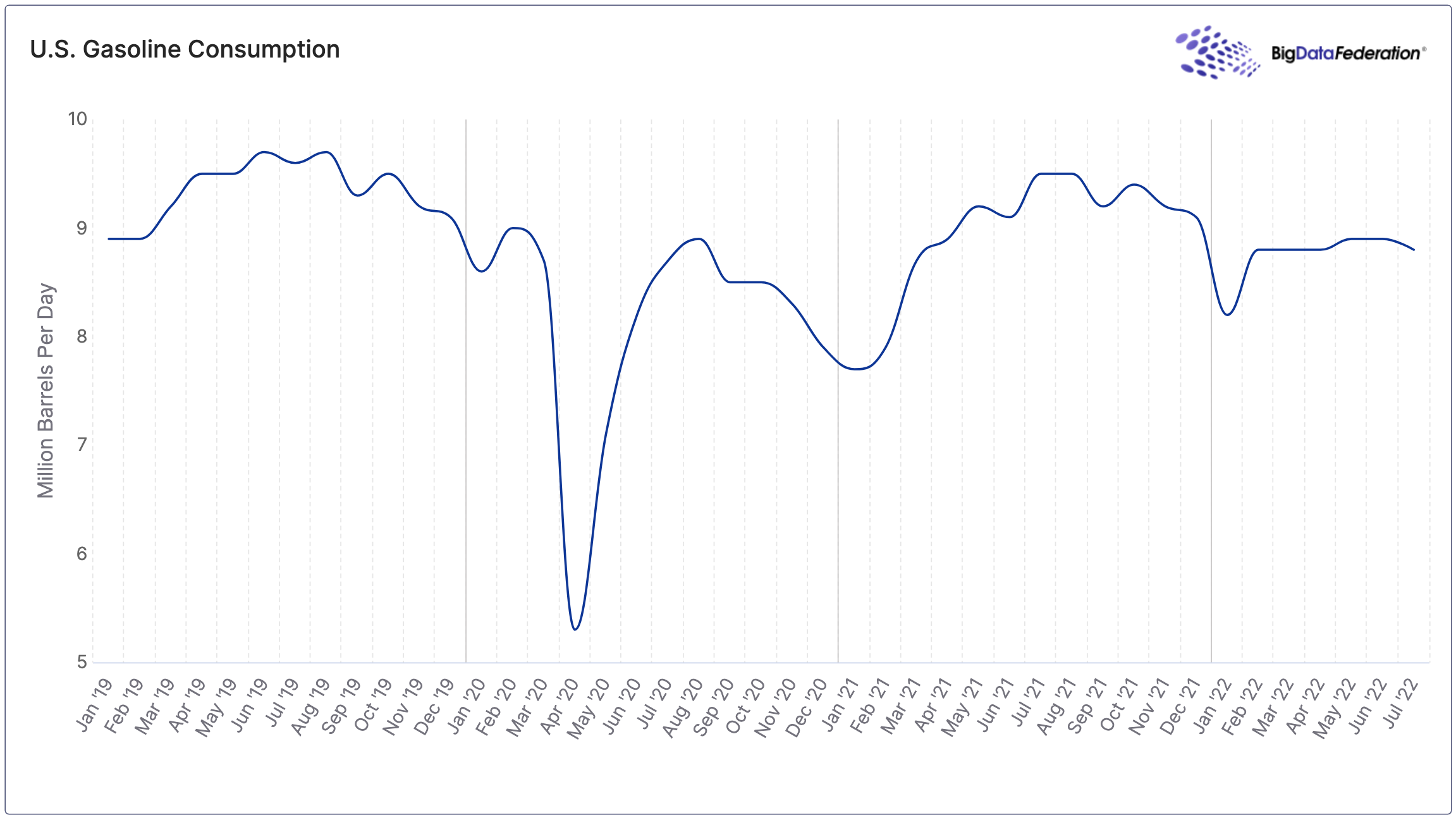
Sustained drops in oil prices would not only drive down inflation but encourage motorists to return to the roads, albeit for a delayed peak to the driving season. Lower prices would also benefit spending on other goods and services as it frees up consumers’ cash. The Biden administration’s Strategic Petroleum Reserve’s release, key to stabilizing markets, comes to an end in autumn, placing heightened attention on developments in the Russia-Ukraine conflict.
1 YoY3 = compared to July 2019
Published by Big Data Federation · All insights · Subscribe to Insights